
National Workshop on Indian Astronomy Before Common Era (IABCE)
National Workshop on Indian Astronomy Before Common Era
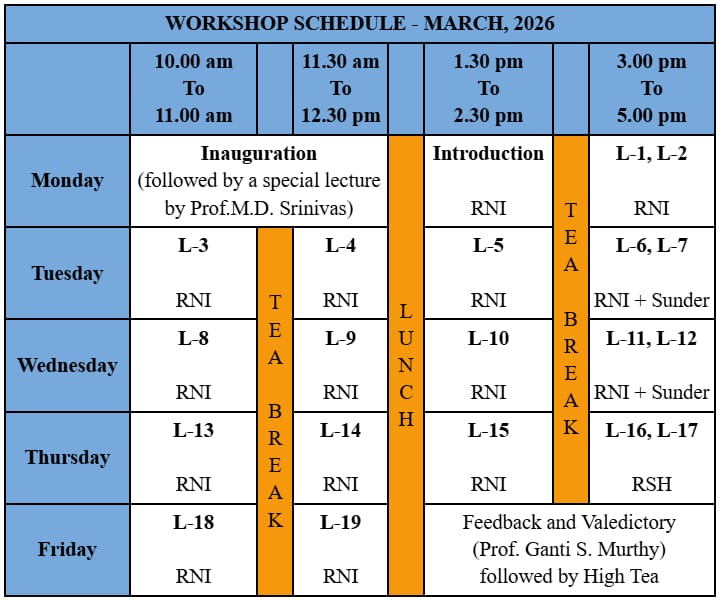
March 23–27, 2026
Organized by the Center for Ancient History and Culture (CAHC), Jain (Deemed-to-be) University, Bengaluru. Sponsored by the Indian Knowledge Systems (IKS) Division of the Ministry of Education, Government of India.
This week-long national workshop brought together scholars of astronomy, mathematics, Sanskrit, and history to explore India's rich pre-Common-Era scientific heritage. Guided by the pioneering research of Prof. R. N. Iyengar alongside keynote presentations and addresses from Prof. M. D. Srinivas, Chancellor Dr. Chenraj Roychand, Registrar Dr. Jitendra Kumar Mishra, Dr. Shankar Rajaraman, Dr. R. S. Hariharan, Prof. Vīranārāyaṇa Pāṇḍuraṅgī, and Dr. Ganti S. Murthy, the workshop covered topics ranging from Vedic cosmography and precession to the Vedāṅga Jyotiṣa, astronomical tools (Stellarium/Astropy), and ancient rainfall forecasting.
View Workshop Weekly Schedule Image
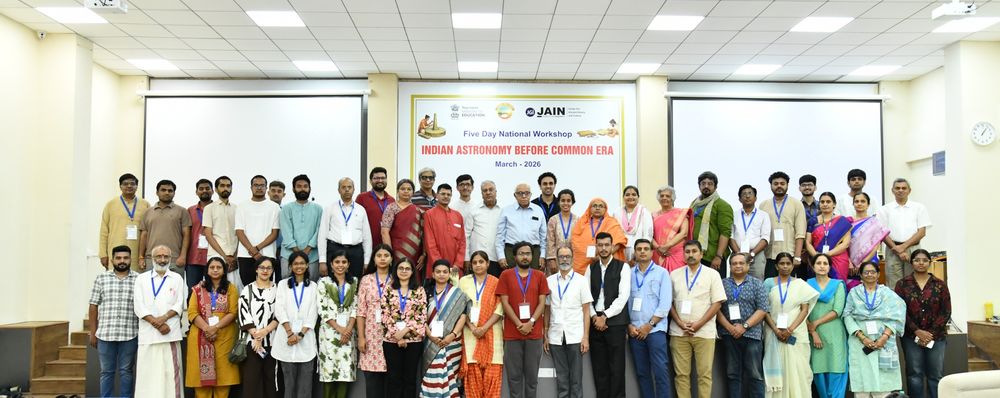
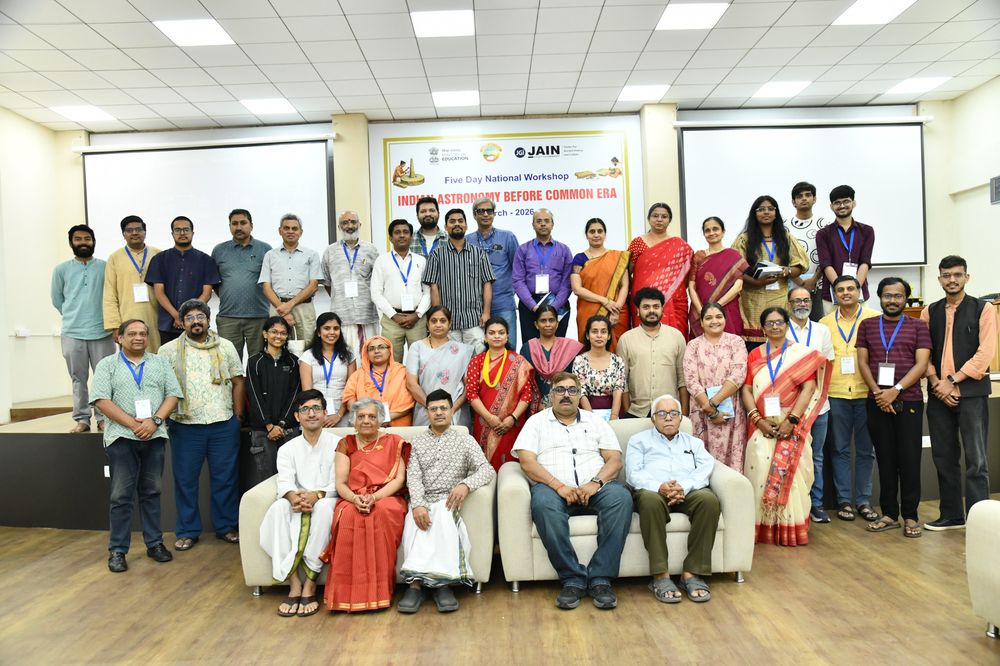
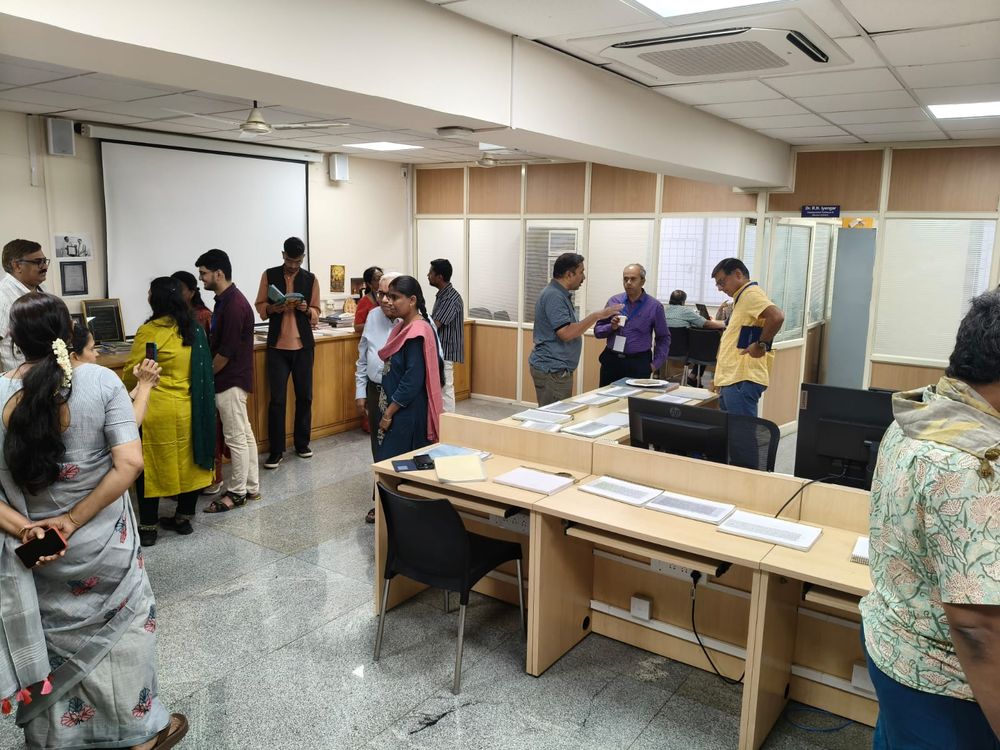
Event Gallery
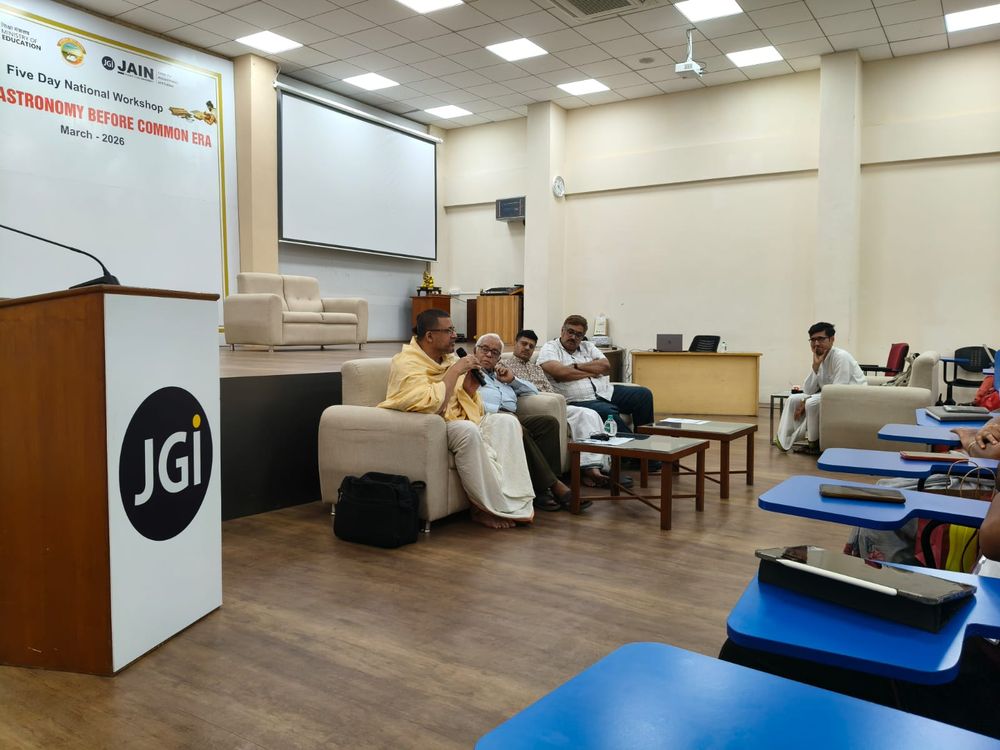
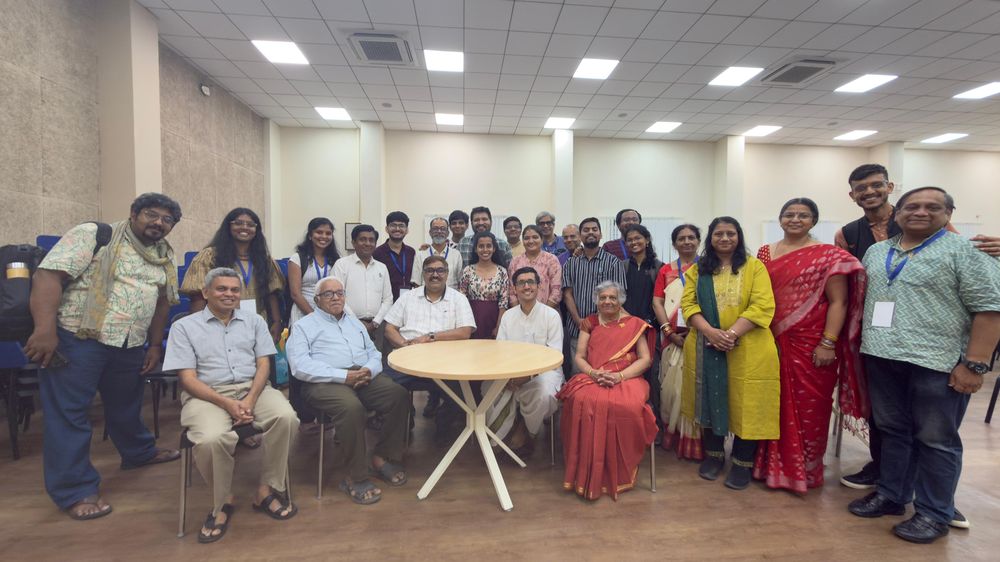
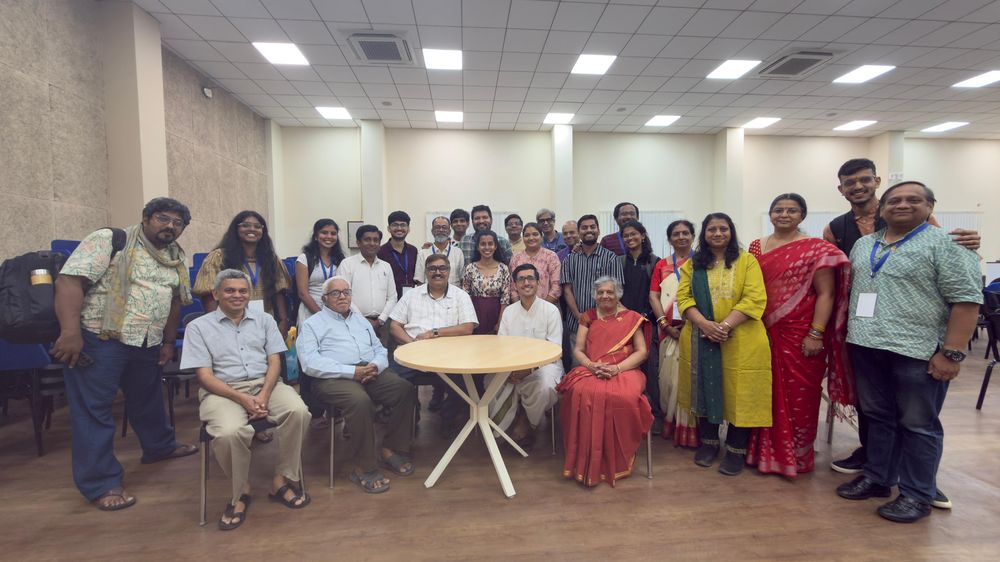
Stellarium Tutorials & Interactive Quiz
Looking for the hands-on Stellarium scripts, demonstration videos, or the 50-question quiz from this workshop? Visit the dedicated tutorial page:
Go to Stellarium Tutorials & Quiz →Video Lectures & Timestamps
Lecture 1
Inaugural session + Prof. M.D. Srinivas's special lecture
Presented by: Dr. Shankar Rajaraman, Prof. M. D. Srinivas, Dr. Jitendra Kumar Mishra, Prof. R. N. Iyengar
+
Inaugural session + Prof. M.D. Srinivas's special lecture
Presented by: Dr. Shankar Rajaraman, Prof. M. D. Srinivas, Dr. Jitendra Kumar Mishra, Prof. R. N. IyengarThe opening day. The first hour is the inaugural function; the rest is Prof. M.D. Srinivas's keynote, "Indigenous Development of Scientific Astronomy in India," which lays the historiographical groundwork — how India's pre ‑ Common ‑ Era astronomy was long misread as borrowed from Mesopotamia/Greece, and what the texts actually show. ▸ Part A — Inaugural function
Lecture 2
Inauguration (afternoon) + first lecture
Presented by: Dr. Chenraj Roychand, Prof. R. N. Iyengar
+
Inauguration (afternoon) + first lecture
Presented by: Dr. Chenraj Roychand, Prof. R. N. IyengarThe opening afternoon. After lunch and logistics, Iyengar frames the workshop as interactive (questions expected, not a lecture course); participants introduce themselves; the Chairman addresses the participants on reviving Indian intellectual tradition and IKS. Iyengar then opens the course proper — how to approach "before Common Era" astronomy through the Vedic source texts — covering the tripartite universe, the Nirukta's "three devas suffice" argument, the classification of the Vedas and Vedāṅgas, the Ṛgveda 10.72 cosmogony, and the first key numbers (15, 30, 360, 3339).
Lecture 3
Indra, soma, 3339 & the Saros cycle
Presented by: Prof. R. N. Iyengar
+
Indra, soma, 3339 & the Saros cycle
Presented by: Prof. R. N. IyengarA dense methods lecture on extracting astronomy from Vedic texts. Iyengar reads Indra's soma ‑ drinking three ways (herb / moon / mind) and uses the principle that a devatāis fixed by location + number + action to decode the number 3339 of the Viśvedevas as an eclipse (Saros) count. He ties this to the dārśa‑paurṇamāsa ritual and its dārvīfigure, derives that figure from the Śulba Sūtras (squaring the circle, √2, Baudhāyaṇa's theorem), and links the 18 ‑ year and 5 ‑ year cycles to calendar intercalation and the Rāhu period.
Lecture 4
Dhruva, Śiśumāra & precession + first Stellarium tutorial
Presented by: Prof. R. N. Iyengar, Sunder Chakravarty
+
Dhruva, Śiśumāra & precession + first Stellarium tutorial
Presented by: Prof. R. N. Iyengar, Sunder ChakravartyProf. R.N. Iyengar's pole ‑ star lecture, then Sunder Chakravarty's first Stellarium tutorial. ▸ Session A — Prof. R.N. Iyengar: Dhruva, Śiśumāra & precession (0:05 – ~1:13:40) Iyengar turns to the pole star. He tells the Purāṇic Dhruva legend, then poses the real puzzle — today's pole star isn't the one the Purāṇas describe, and for roughly 3,000 years there was no true pole star — and uses precession to date the Śiśumāra (Draco) figure and its star Dhruva to ~2830 BC. He then traces the idea forward through the Maitrāyaṇī , the Mahābhārata, Śa ṅkara, Alberuni and Kamalākara, showing how Meru–Dhruva cosmology and the marriage ‑ time Dhruva ‑ darśana survived even after the star itself drifted off the pole.
Lecture 5
The nakṣatra system, calendar & ṛtus; intro to the VGJ
Presented by: Prof. R. N. Iyengar
+
The nakṣatra system, calendar & ṛtus; intro to the VGJ
Presented by: Prof. R. N. IyengarIyengar builds the nakṣatra system: why the moon needs star ‑ asterisms as a fixed coordinate background, the two lunar cycles (sidereal 27/28 and synodic ~29.5), and how the seasons and intercalation forced a move from pakṣa ‑ reckoning to a solar ‑ anchored calendar. He covers heliacal rising and the "morning nakṣatra," then the equinoctial full ‑ moon dating method (Kṛttikā ¼ opposite Viśākhā ¾ → the ~1800 BC "Maghādi" epoch), and finally introduces the Vṛddha ‑ Gārgīya ‑ Jyotiṣa (VGJ) as a primary Vedāṅga‑Jyotiṣa text.
Lecture 6
VGJ & Parāśaratantra + second Stellarium tutorial
Presented by: Prof. R. N. Iyengar, Sunder Chakravarty
+
VGJ & Parāśaratantra + second Stellarium tutorial
Presented by: Prof. R. N. Iyengar, Sunder ChakravartyThis continues straight from Lecture 5's lunch break: Iyengar finishes the VGJ/Parāśara material, then hands over to Sunder (~2:04) for the second Stellarium tutorial. ▸ Session A — Prof. R.N. Iyengar: VGJ & Parāśaratantra (0:00 – ~2:03) A detailed look at the two main pre ‑ CE Vedāṅga‑Jyotiṣa texts Iyengar has edited. He explains how VGJ is dated by nakṣatra–season fitting ( Ādityacāra ~1300 BC, Ṛtusvabhāva ~500 BC) and the Śraviṣṭhā ‑ vs ‑ Dhaniṣṭhāidentification dispute, recounts the manuscript ‑ hunting saga, walks the text's structure, then turns to Parāśaratantra and its ~1300 BC date.
Lecture 7
The Mahāsalilam book; Rohiṇī –Soma as the origin of Indian
Presented by: Prof. R. N. Iyengar
+
The Mahāsalilam book; Rohiṇī –Soma as the origin of Indian
Presented by: Prof. R. N. Iyengarastrology Centred on Iyengar's Mahāsalila . He defends the Vedic roots of Vedāṅga‑Jyotiṣa against the "tithi is Babylonian" argument, distinguishes pre ‑ siddhāntic / pre ‑ horāastronomy, and walks the text — the grahas, the Mahāsalilam cosmogony, the moon's phases — building to the Rohiṇī –Soma legend, which he reads as the origin of Indian astrology : Soma's curse and his promise to move equally with all the nakṣatras turns single stars into the equal ‑ sector nakṣatra system, after which nakṣatra ‑ karma, devatāproperties and graha disturbances yield mundane and natal astrology.
Lecture 8
Time ‑ measurement in ancient India + Rainfall in ancient
Presented by: Prof. R. N. Iyengar, Dr. R. S. Hariharan
+
Time ‑ measurement in ancient India + Rainfall in ancient
Presented by: Prof. R. N. Iyengar, Dr. R. S. HariharanIndia The first ~hour finishes Iyengar's astrology thread and his time ‑ measurement talk; the afternoon ("a very good afternoon to everyone," ~1:01:48) is the Rainfall in ancient India talk by R.S. Hariharan, with Iyengar fielding questions. ▸ Session A — Prof. R.N. Iyengar: closing the astrology thread + "How time was measured in ancient India" (0:05 – ~1:01:48) Iyengar first finishes the Rohiṇī –Soma / nakṣatra ‑ karma discussion (a devatāis a fixed "property," not an icon), then gives a self ‑ contained quantitative talk on pre ‑ siddhāntic timekeeping. He traces the day's division into muhūrtas, the problem of measuring the night, and the remarkable solution — Vedic recitation as a chronograph (the bṛhatī ‑ sahasra) and later water ‑ clocks calibrated by reciting a 60 ‑ syllable verse — all under the idea that jyotiṣa is kāla‑vidhāna ‑śāstra.
Lecture 9
"Religious astronomy" (Prof. R.N. Iyengar)
Presented by: Prof. R. N. Iyengar
+
"Religious astronomy" (Prof. R.N. Iyengar)
Presented by: Prof. R. N. IyengarOpening with a salute to Vālmīki, Iyengar turns to how Vedic/pre ‑ siddhāntic astronomy underpins everyday Hindu practice. He explains the purāṇic billions ‑ of ‑ years (kāla must start from Sūrya), reframes navagraha worship (a graha is a "holder" of soma/kāla, not a planet to be worshipped), gives the indigenous graha order and the planets' real visibility geometry (Venus's pentagon, Mercury's bow), and closes on comets as disaster ‑ omens in the Mahābhārata and the Sarasvatī 's drying. The video ends with Vedic chanting.
Lecture 10
Valedictory session
Presented by: Prof. R. N. Iyengar, Prof. Vīranārāyaṇa Pāṇḍuraṅgī, Dr. Ganti S. Murthy, Dr. R. S. Hariharan
+
Valedictory session
Presented by: Prof. R. N. Iyengar, Prof. Vīranārāyaṇa Pāṇḍuraṅgī, Dr. Ganti S. Murthy, Dr. R. S. HariharanThe closing session — not a lecture but the workshop's valedictory. After Iyengar frames it and introduces the dignitaries, participant feedback (backgrounds spanning physics, Sanskrit, Ayurveda, Himalayan archaeology, UX design, farming, school ‑ teaching and IT), followed by two formal addresses — Prof. Vīranārāyaṇa Pāṇḍuraṅgī (a Vedānta scholar) on the neglect of Vedic studies, and chief guest Dr. Ganti Murthy (IKS national coordinator) on the division's outreach and the call to carry the paramparāforward. It ends with a formal vote of thanks.